
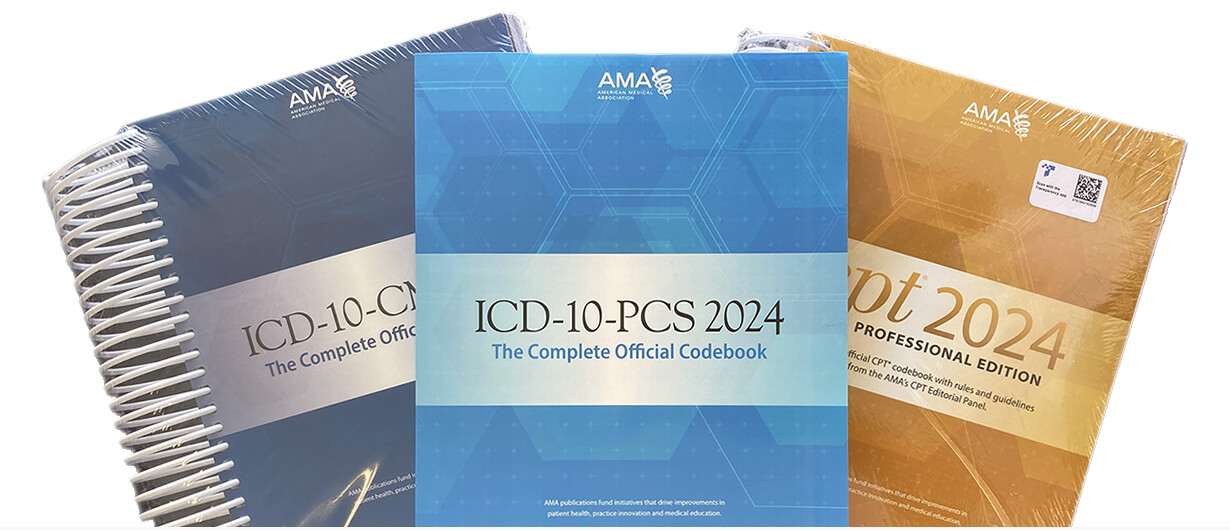
We get asked the above question about our coding books all the time!
Deciding between spiralbound or softbound format books is hands down, our most popular product question from customers. However, there is not a 100% correct answer as to which book format you should choose.
That decision all comes down to user preference, and hopefully this article will help you decide what’s best for your situation. When choosing between a spiral coding book or softbound edition, there are several factors you should consider, based on your own workflow:
Cost Effectiveness
Coding books are not cheap, especially on a yearly basis. Depending on your budget, a disadvantage to spiral format books is their cost.
Softbound carry a lower publishing cost than their counterpart and are always cheaper in retail for the consumer. Softbound format may have a lower sticker price, but many coders find value in spending a few extra dollars on spiralbound books.
Cost Effectiveness: Softbound is cheaper.
Size / Portability
Do you code from a clinic / office, or do you need to lug these books to your in-person coding course or remote work site?
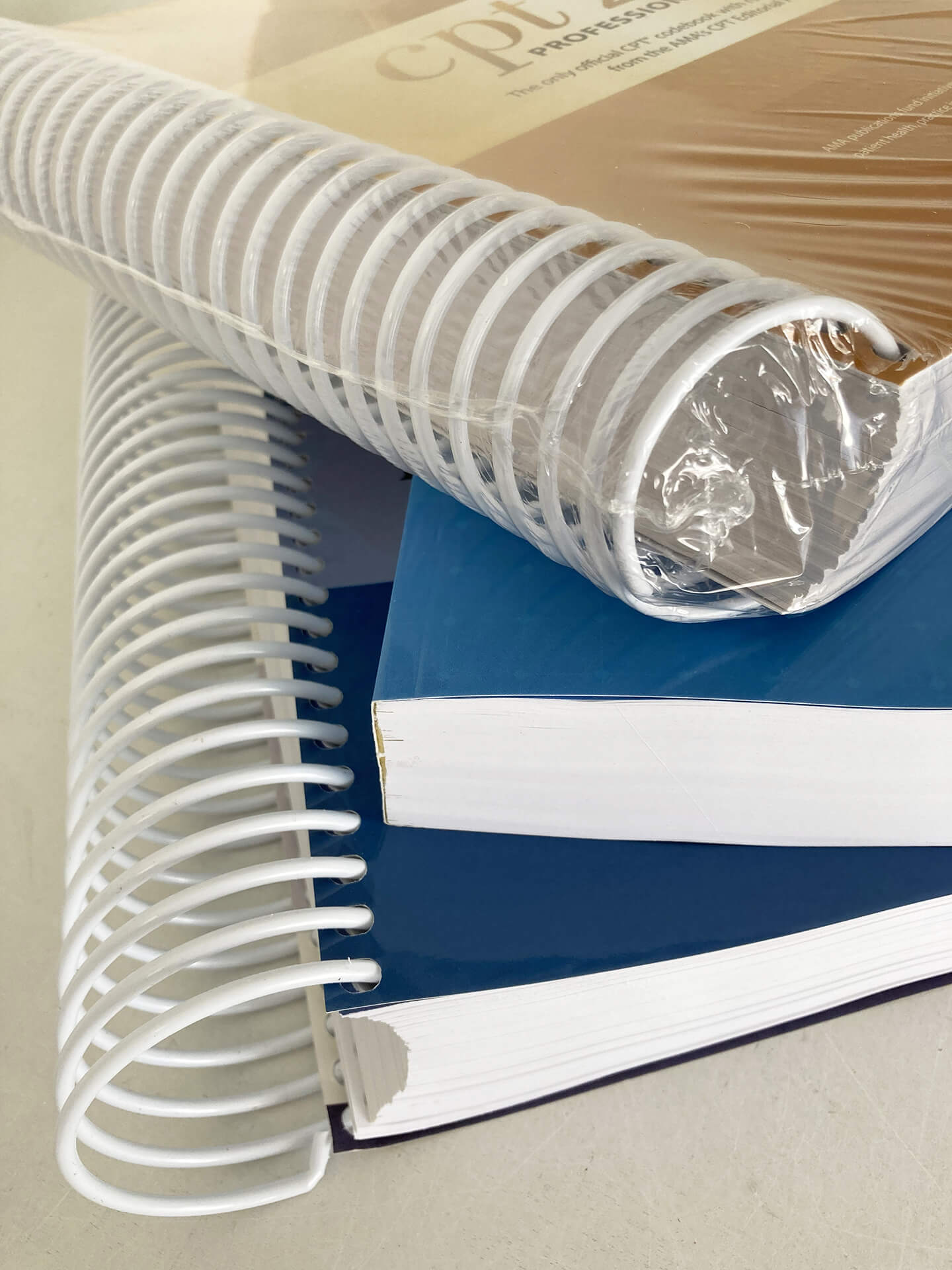
Depending on the code set, spiral books are anywhere from ½ inch, up to 1-2 inches wider than an equivalent softbound plus vertical height, due to the additional dimension of their spiral coil.
Although CPT and HCPCS books are not overly thick, an ICD10 book can be very bulky (up to 3 inches thick!) and a larger book, with an increased dimension may not be feasible for you.
Size / Portability: Softbound books have a smaller footprint.
Workspace / Positioning
Continuing with points from “Size / Portability” above, do you also prefer your book to lay flat on your desk while coding? This is the number one feature coders prefer in a spiralbound book, that softbound cannot deliver.
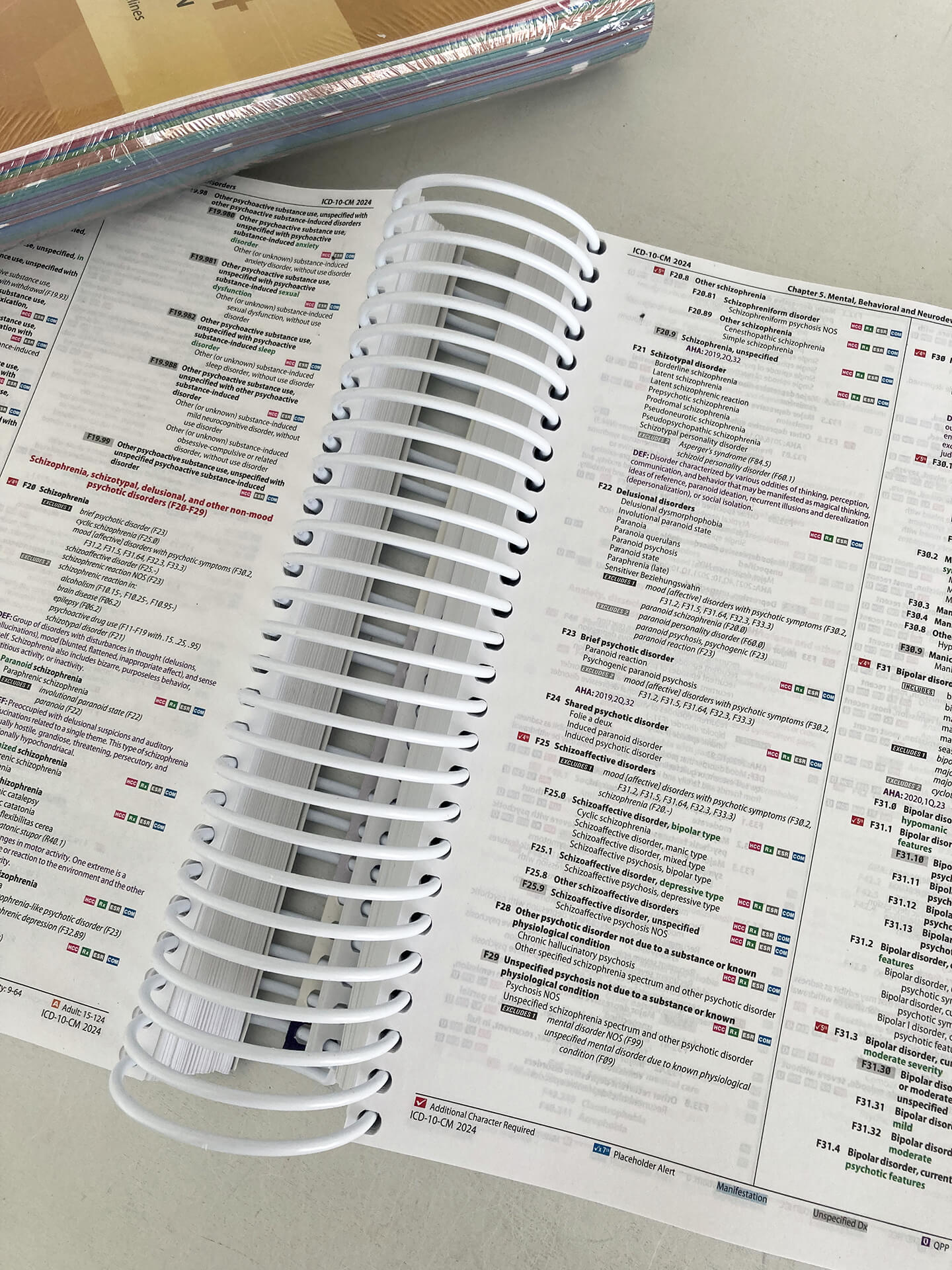
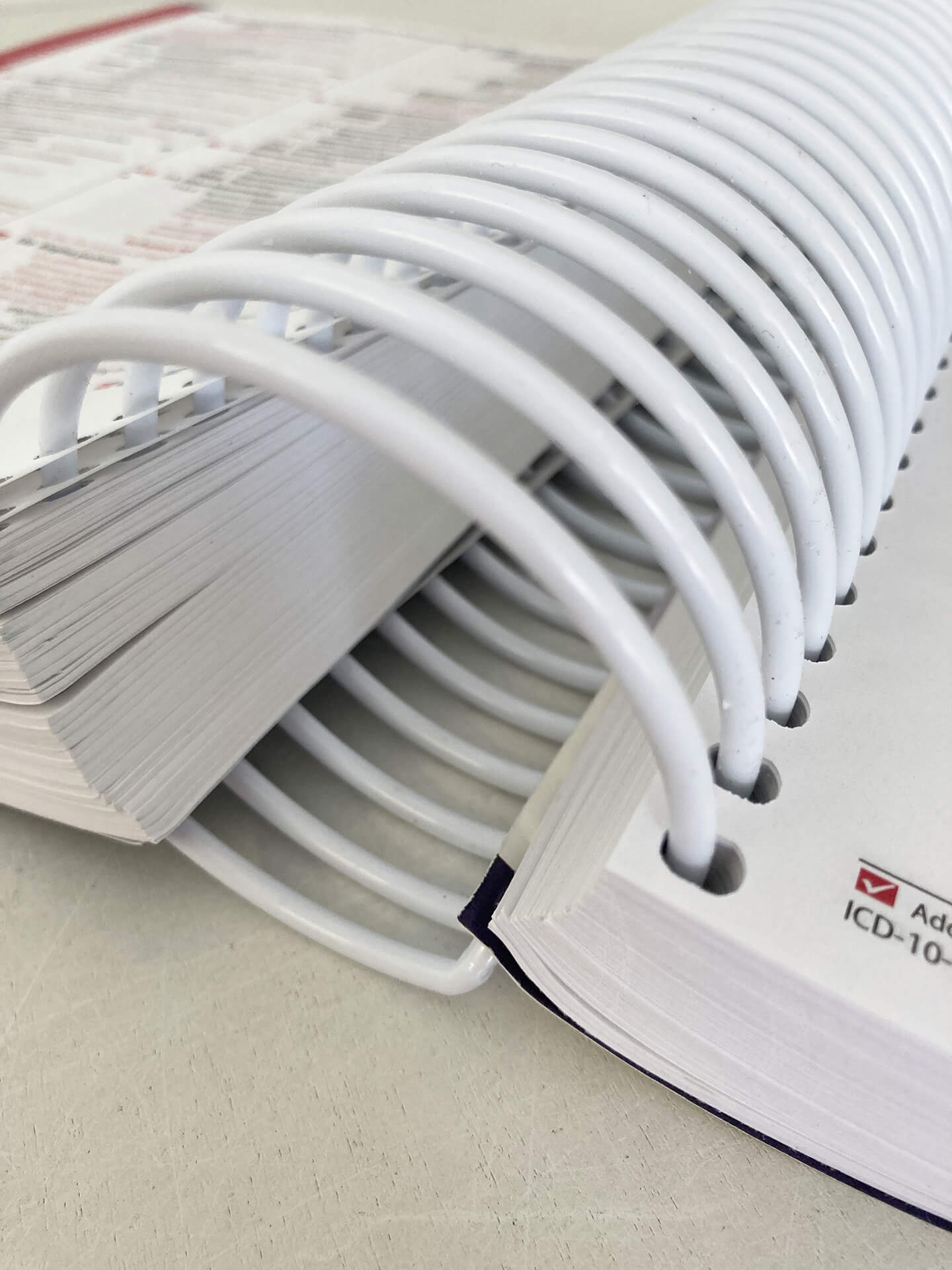
Although softbound books are a more convenient size, a spiral code book allows all pages to flop open and lay completely flat on either side of its coiled binding. Not only that, but the heavy book remains (more) still while flipping through pages.
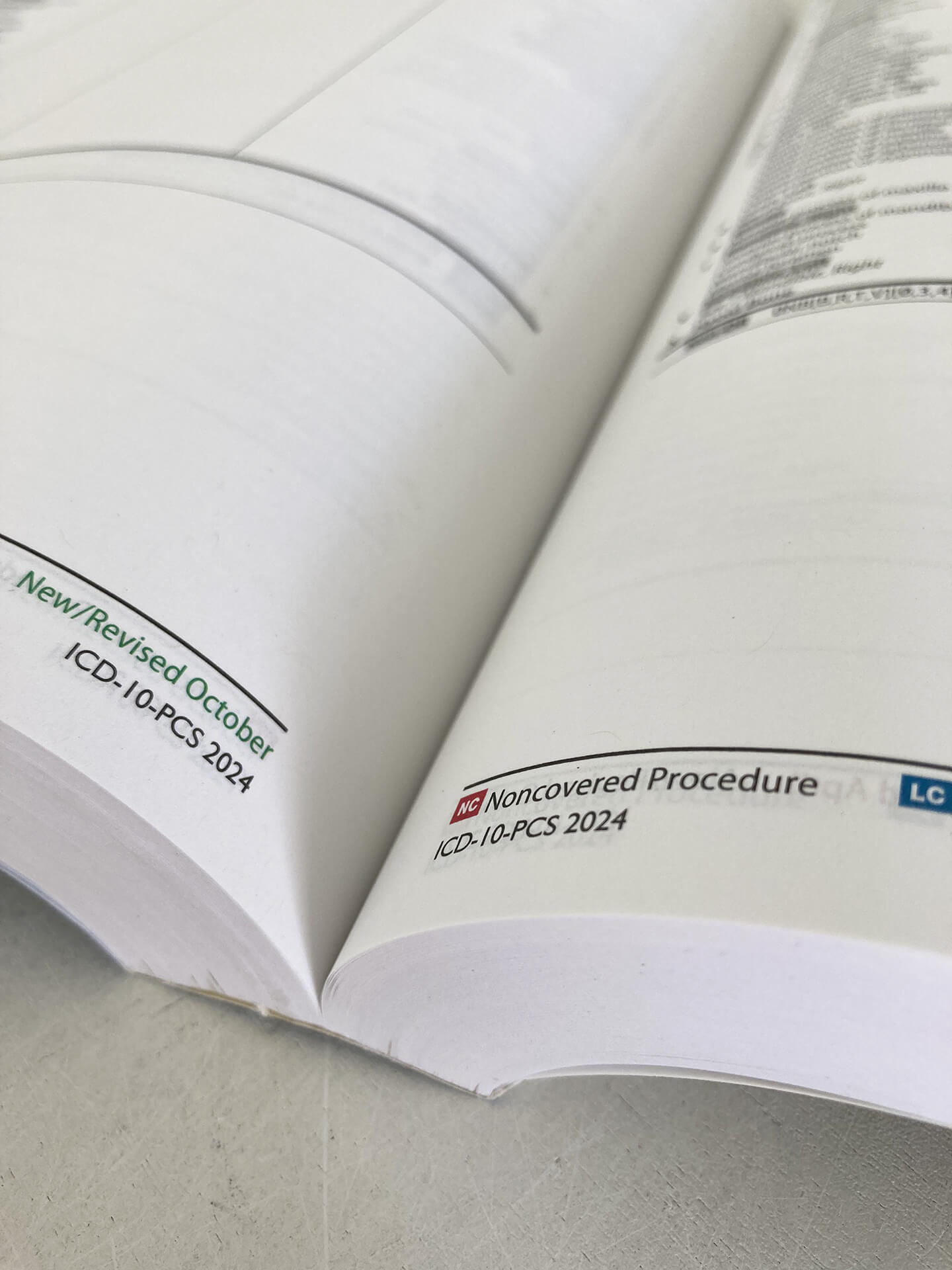
As demonstrated in the pictures below, softbound books make arches on your desk, that can take up more space and impede quicker page navigation. Sometimes, the pages can even turn themselves, meaning you just lost your place in the book.
Workspace / Positioning: Spiralbound
Enhanced Features
When it comes to their Coder’s Choice or CPT Plus series, PMIC offers the same exact content in either softbound or spiral editions. In Optum’s case, Expert spiral format provides coders with even more enhanced features over their entry level Professional softbound series.
Some examples of these enhanced and exclusive features include:
- Expert Edition: Spiral bound and appendixes which include: POA coding and reporting tutorial; pharmacology listings of common drugs with therapeutic classes and indications; and code lists for CC, MCC and PDx CC/MCC.
- Expert Edition: Downloadable files for CC Excludes PDx collection, POA exempt codes.
- Expert Edition. Medicare Average Payment Table: Access a Medicare Average Payment Table online for a baseline for payment rates (downloadable).
Enhanced Features: Most spiralbound books offer enhanced features not contained in all softbound editions.
Durability
Both coding book binding formats will experience durability issues.
Across the industry, spiralbound is often considered more durable since that format can lay prone on your desk. Since they don’t lay flat, a softbound is more susceptible to spine damage from additional movement and stress placed on the binding from periodic use.
The more a softbound book is picked up or moved, the more inclined their bindings are to split, wear out, and fall apart.
Coding books are printed on razor thin recycled paper, making all books predisposed to paper tears. Over the course of time, spiralbound books are more likely to have ripped pages near the coils, due to constant page turning. Plastic coils can also crack, and may need to be “re-threaded” back through their punched holes.
Durability: Neutral. Both formats are prone to damage over time, but spiralbound is considered more durable.
Spiralbound vs Softbound: Pros and Cons
| Softbound | Spiral | |
|---|---|---|
| Cost | Pro: Lower price | Con: More expensive |
| Portability | Pro: Smaller publication dimension | Con: Larger dimension |
| Workspace | Con: Cluttery | Pro: Lays flat |
| Features | Con: Less enhanced features | Pro: Enhanced features in most editions |
| Durability | Neutral | Neutral |
Whether it’s the coil, pages, or stressed spine, ALL coding books are subject to wear and tear over the course of the year, especially under heavy use. Gradual deterioration should be expected.
Softbound books are smaller in size and cost, and less convenient to manage in your workspace. If you don’t mind paying extra for the spiral binding, its larger size will lay flat on your desk, and often include enhanced features for more efficient coding.
If you were unsure of what coding book format to choose, hopefully you found this article beneficial in your decision-making process! Experienced coders should already have established book preferences, but students and novice coders can always benefit from additional guidance before purchase.